Home › Functions › Deviation management

Function

Deviation management in manufacturing

Capture it where it happens. See what to tackle first. Stay on it until the KPI shows the fix.

Capture

At the board, on a tablet, or automatically when a KPI misses its target

Overview

Deviation list, top deviations and Pareto per team and department

Evidence

Countermeasure right on the deviation, documented for audits, ISO and VDA

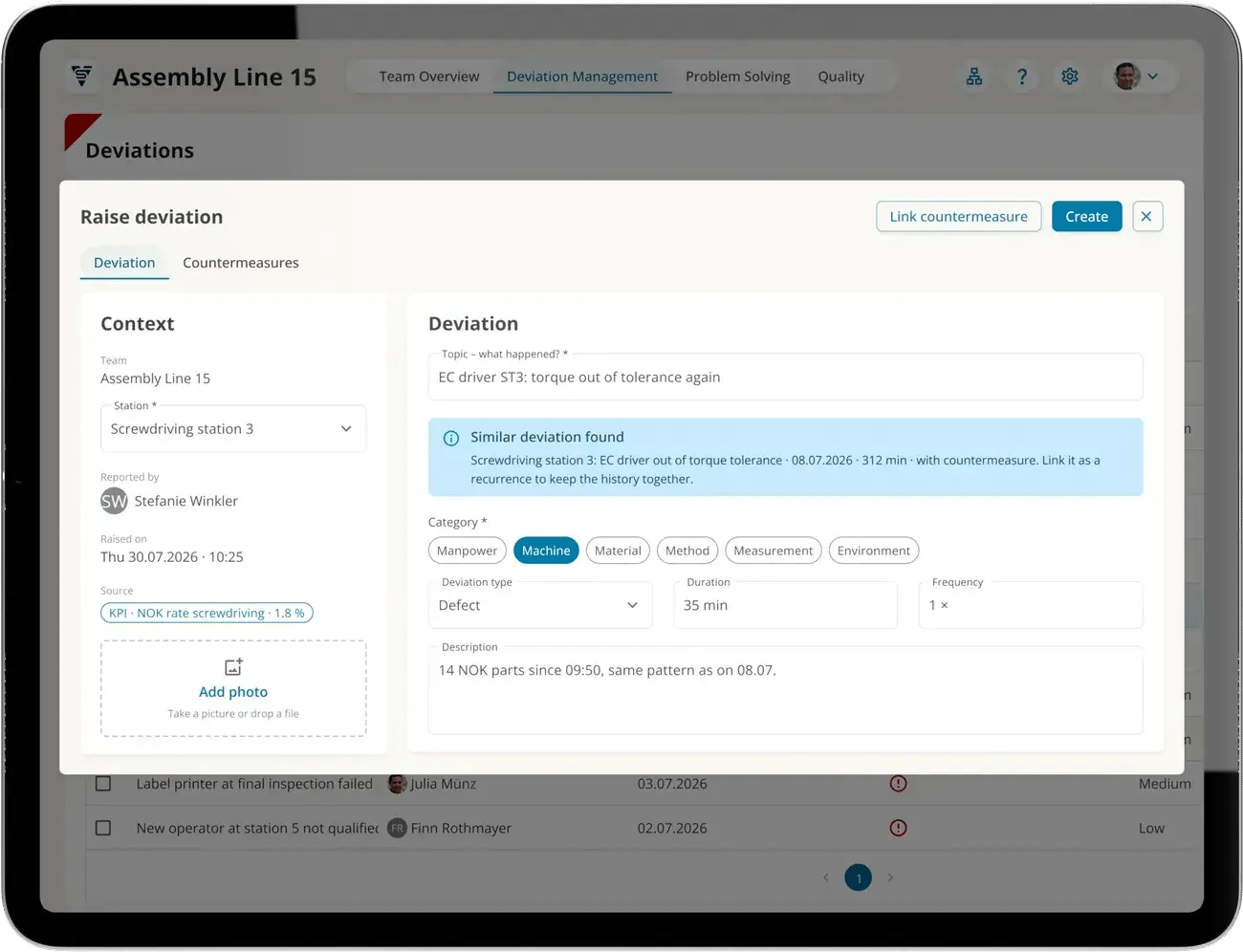
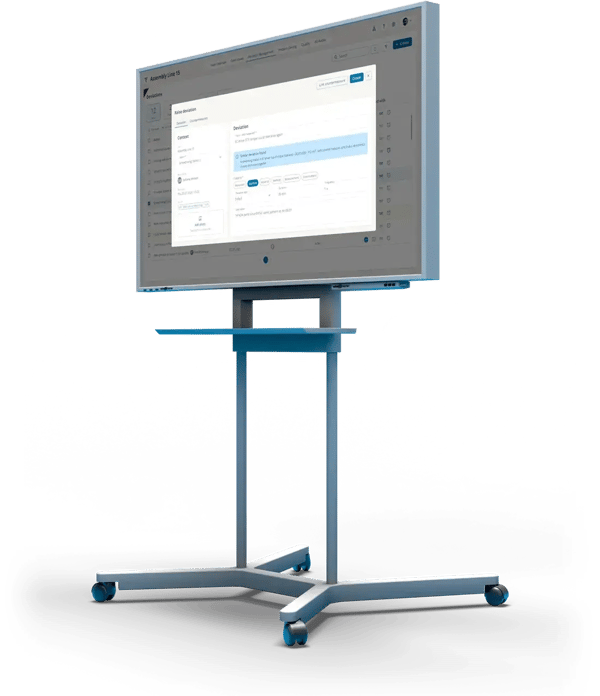
Digital shop floor board from ValueStreamer on a mobile large screen: raising a deviation at screwdriving station 3 with category, duration and a hint about a similar deviation

In short

What is deviation management?

Deviation management is the fixed routine a team uses to capture every deviation from target, assess it and follow it through to a countermeasure that works. On the shop floor, the deviation is recorded where it happens, with location, category and duration. It goes onto the team board, gets an owner and a countermeasure with a due date, and is closed only when the KPI shows it stays away.

In quality management, this is a process of its own. On the shop floor, it is daily business: every shift brings deviations, and the meeting at the board decides what comes first.

Fixing deviations: how a deviation is handled

1

Capture

At the board during the meeting, on a tablet right at the station, or automatically when a KPI misses its target.

In ValueStreamer: manually or by rule on the KPI, with data from MES and machines via REST API.

2

Assess and prioritize

Category by the 6Ms, duration and frequency. The Pareto shows which cause costs the most.

In ValueStreamer: deviation list, top deviations and Pareto per team and for the level above.

3

Set a countermeasure

If the cause is clear, a PDCA countermeasure follows. If it is unclear or the problem keeps coming back, it moves into structured problem solving.

In ValueStreamer: countermeasure with owner and due date right on the deviation, A3 at the push of a button. Go to structured problem solving

4

Follow up and escalate

Open countermeasures stay visible. Whatever the team cannot solve on its own goes one level up.

In ValueStreamer: deviation list with countermeasures, escalation through the cascade, closed only after the effectiveness check.

Deviation management is step 2 of the loop at the team board.

  1. 1 · KPITarget missed?KPIs land on the board automatically and show where things go wrong.
  2. You are here2 · DeviationWhat happened?Capture it where it happens. The Pareto shows what to tackle first.
  3. 3 · Root causeWhy?PDCA for clear cases, A3 with Ishikawa for the tough ones.
  4. 4 · CountermeasureWho does what by when?Tasks and T-Cards with an owner and a due date.

Back to 1: the KPI shows whether the countermeasure worked

Raising a deviation in ValueStreamer on a tablet: team, station, reporter, category machine, duration 35 minutes, photo and a hint about a similar deviation from July 8

Raising a deviation at screwdriving station 3, with a hint about a similar deviation

Capture

Captured where it happens

The deviation is recorded at the station, not from memory at the end of the shift. Team, station, reporter and time are already filled in, and the team adds what happened.

  • Category by the 6Ms, duration and frequency
  • Photo straight from a tablet or smartphone
  • Linked to the KPI where it showed up
  • Recurrences recognized: similar deviations are linked instead of logged twice

Automatically from the KPI

Target missed, deviation created

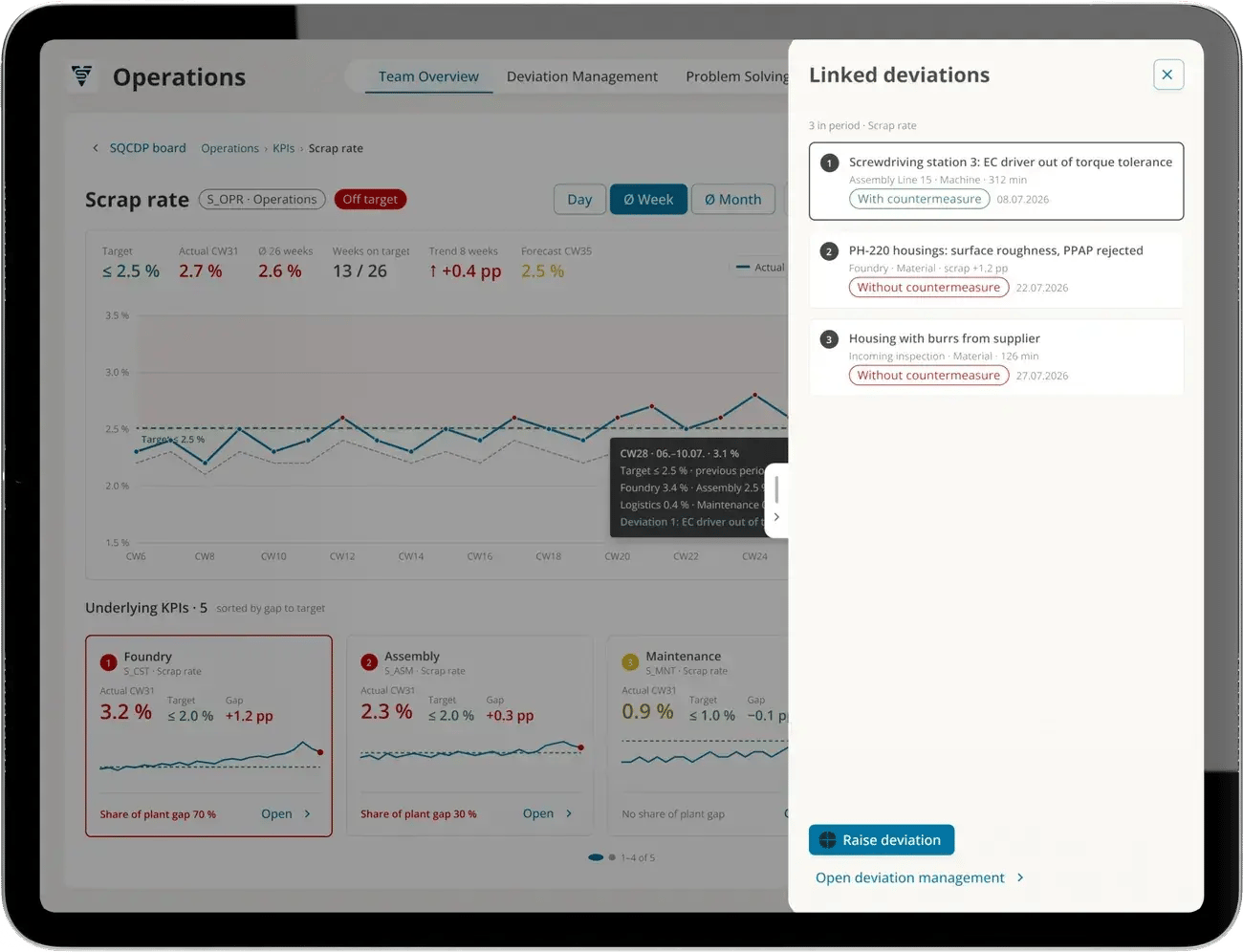
When a KPI misses its target, ValueStreamer creates the deviation automatically, or the team logs it with one click on the KPI. KPIs, machine and process data come in via REST API from MES, ERP or BI.

  • Set per KPI: create automatically or capture manually
  • Linked deviations right on the KPI trend
  • From the plant KPI down to the unit that caused it

More on KPI management

Scrap rate KPI for operations in ValueStreamer on a tablet: trend off target, underlying KPIs and three linked deviations with and without countermeasure

Scrap rate for operations: off target, with three linked deviations

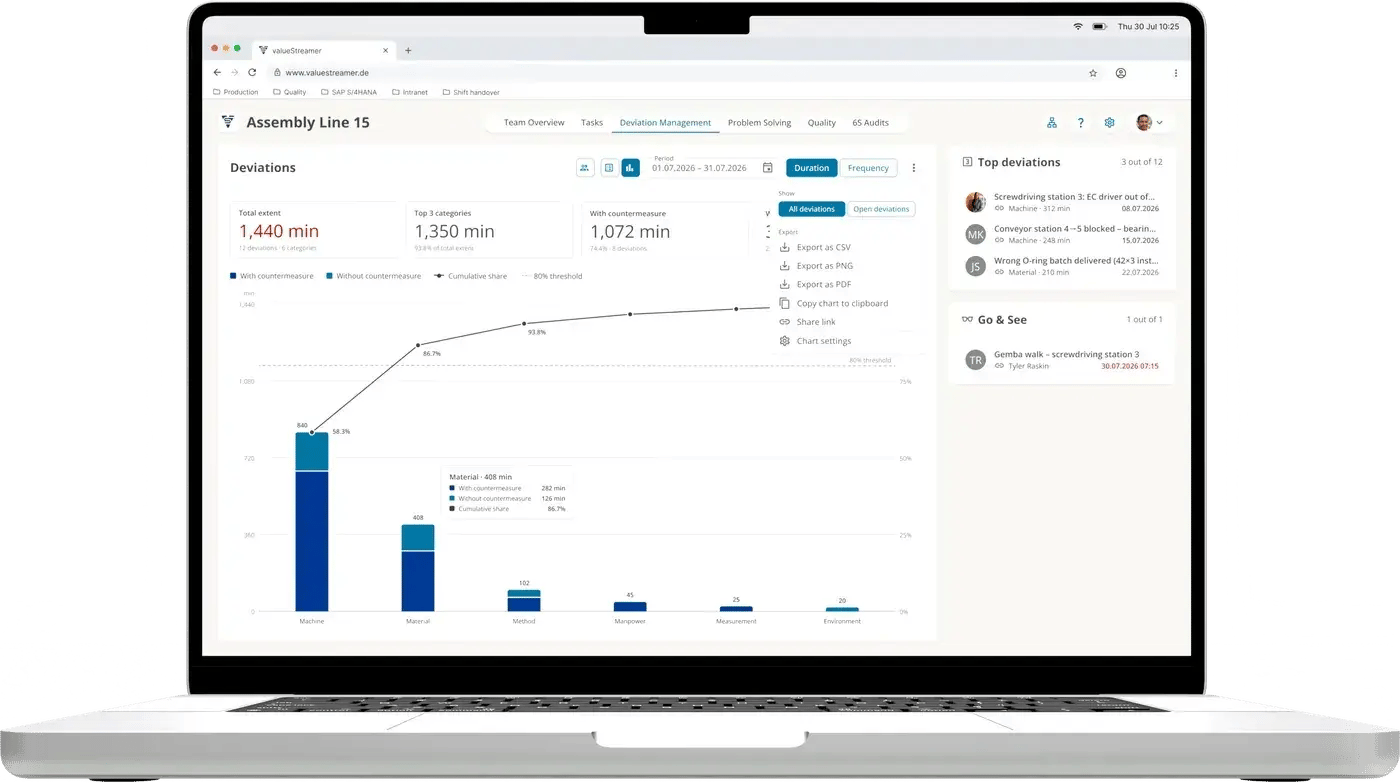
Deviation management in ValueStreamer on a laptop: Pareto of deviations by duration with and without countermeasure, cumulative share, next to it top deviations and Go & See

Assembly line 15: 1,440 minutes from 12 deviations, the top 3 make up 93.8 %

Overview

See what comes first

All of a team's deviations in one deviation list and as a Pareto by duration or frequency. For the meeting at the board, and for the level above, which sees where its department is struggling.

  • With and without countermeasure in one bar
  • Top deviations and deviations without a countermeasure at a glance
  • Plan a Go & See straight from the deviation

Try the Pareto yourself

Countermeasure

Fixed, not just noted

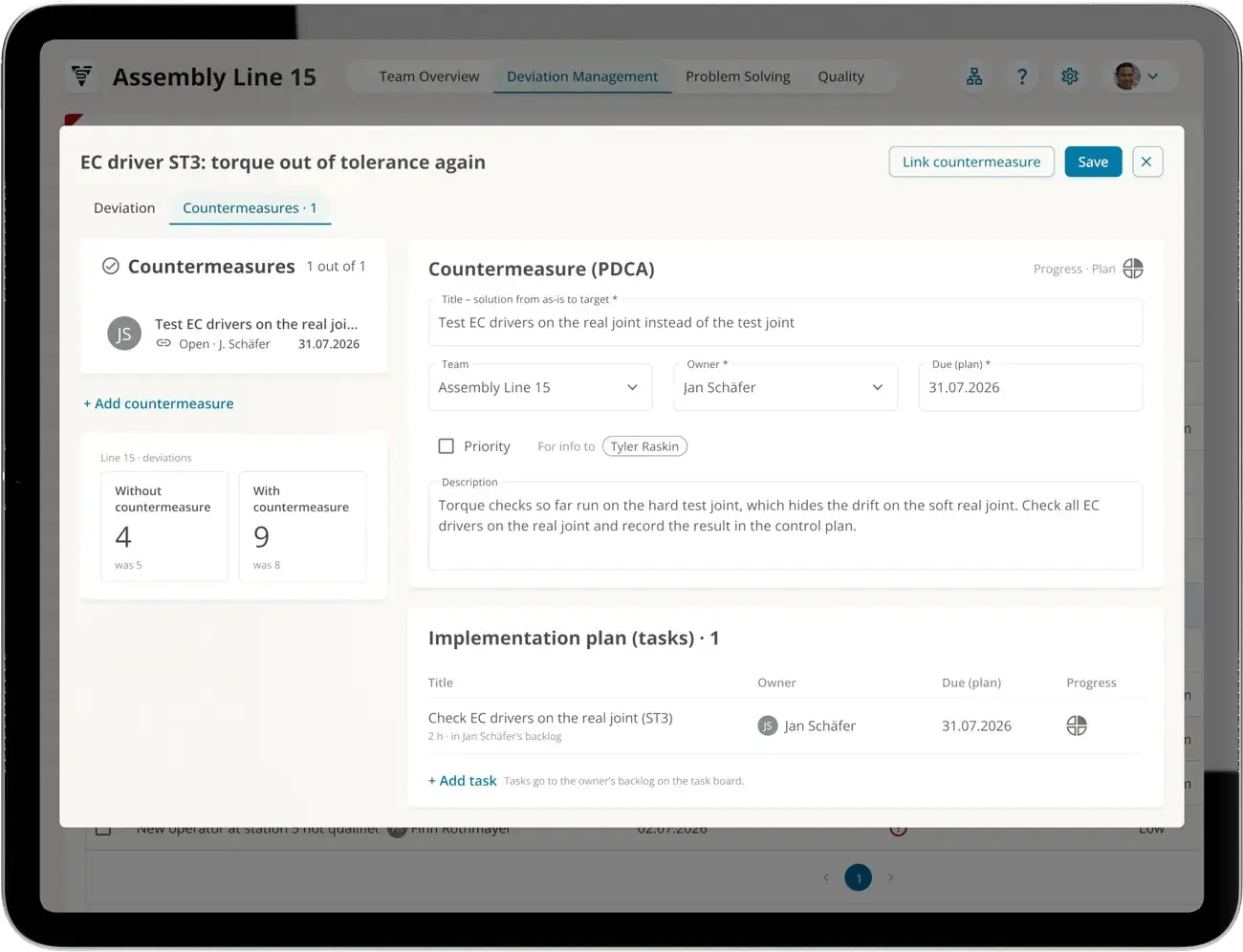
The countermeasure sits right on the deviation: a PDCA fix with owner, due date and implementation plan. The tasks land on the owner's task board, and the deviation stays open until the effect has been checked.

  • Countermeasure and tasks in one step
  • Escalation through the cascade when the team cannot solve it alone
  • Fully documented for audits, ISO and VDA

Cause unclear or problem keeps coming back?

Then it belongs in an A3 with 5 Whys and Ishikawa. Go to structured problem solving

Countermeasure right on the deviation in ValueStreamer on a tablet: PDCA countermeasure with team, owner, due date and implementation plan

PDCA countermeasure for the deviation at screwdriving station 3

From lean practice

Deviations that get closed

ValueStreamer grew out of lean consulting (formerly STAUFEN.AG). The routine from deviation to verified countermeasure comes from shop floor management practice in many plants.

  • Audit-ready
  • ISO compliant
  • VDA compliant
  • ISO/IEC 27001:2022 certified

Read the Ziehl-Abegg case study

117,000+

deviations closed

53,000+

countermeasures completed

4,900+

teams work with ValueStreamer

4 weeks

from kickoff to go-live

Totals as of October 2026.

FAQ

Frequently asked questions

The fixed routine for capturing deviations from target, assessing them and following them through to a countermeasure that works. In manufacturing, it covers capturing the deviation where it happens, prioritizing by frequency and duration, setting a countermeasure with an owner and a due date, and closing it only when the KPI shows the effect.

See your deviations on the board

A 30-minute demo built around your questions: from the captured deviation to the Pareto and the verified countermeasure.